
Exploring Siena
What to See in Siena: A Complete Guide to Visiting the City
Siena’s historic center, recognized as a UNESCO World Heritage Site, still retains a distinctly medieval urban layout. Narrow streets, steep lanes, squares and brick buildings form a compact cityscape that can be explored almost entirely on foot.
The main attractions are all within easy walking distance of one another: Piazza del Campo, Siena Cathedral, Santa Maria della Scala and the Basilica of San Domenico can all be reached with a short walk.
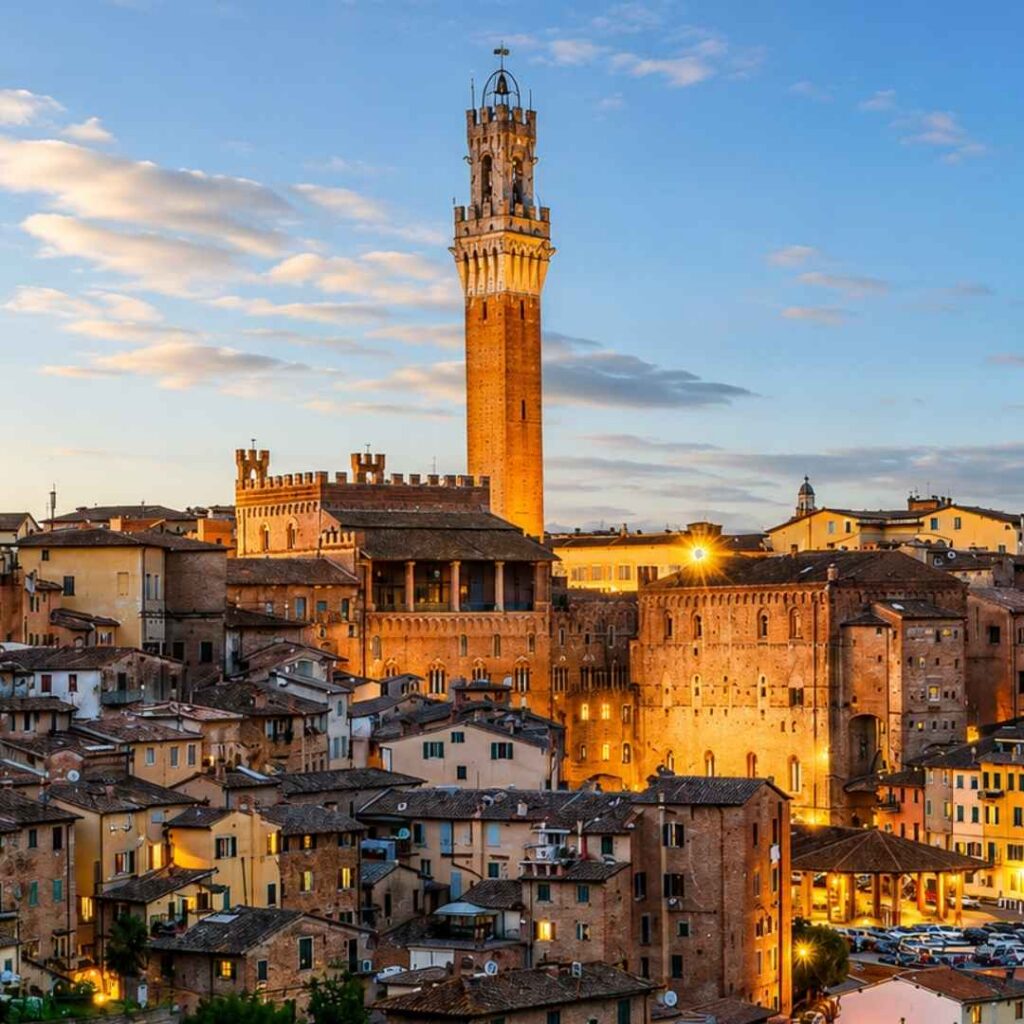
What to See in Siena: Must-See Attractions
The main things to see in Siena are located in the historic center and can easily be reached on foot. The city is home to medieval squares, churches, museums, civic buildings and lesser-known places that reflect its artistic and religious history.
Must-see attractions include:
- Piazza del Campo, Palazzo Pubblico and the Torre del Mangia;
- Siena Cathedral and its monumental complex;
- Santa Maria della Scala;
- the Basilica of San Domenico and the sites associated with Saint Catherine;
- the National Art Gallery of Siena;
- the Bottini tunnels and Fontebranda;
- Orto de’ Pecci;
- the Medici Fortress.
Piazza del Campo, Palazzo Pubblico and the Torre del Mangia
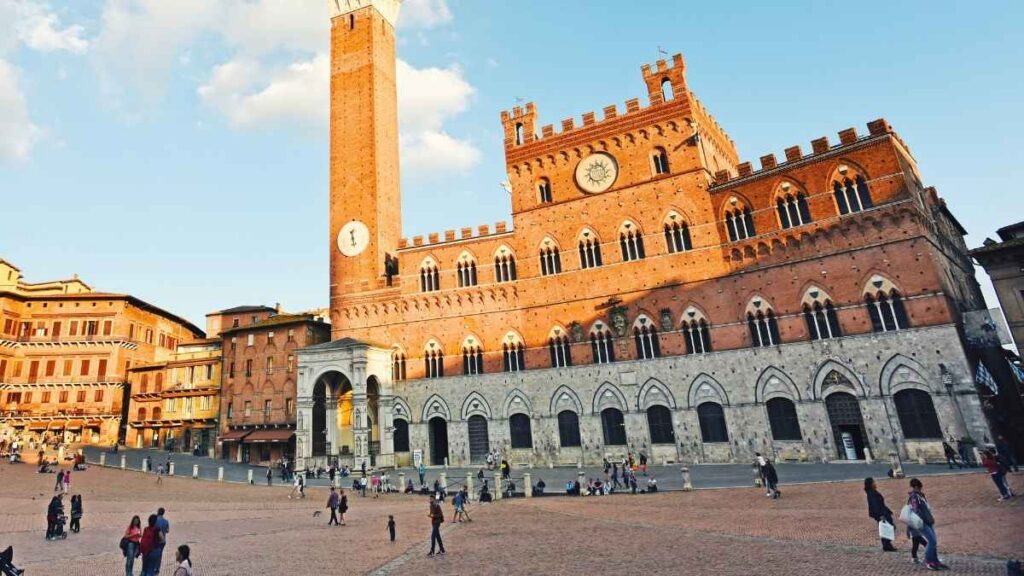
Piazza del Campo is the symbolic heart of Siena and one of Italy’s most recognizable medieval squares. Its distinctive shell shape, divided into nine sections, recalls the Government of the Nine, which ruled the city during its period of greatest development.
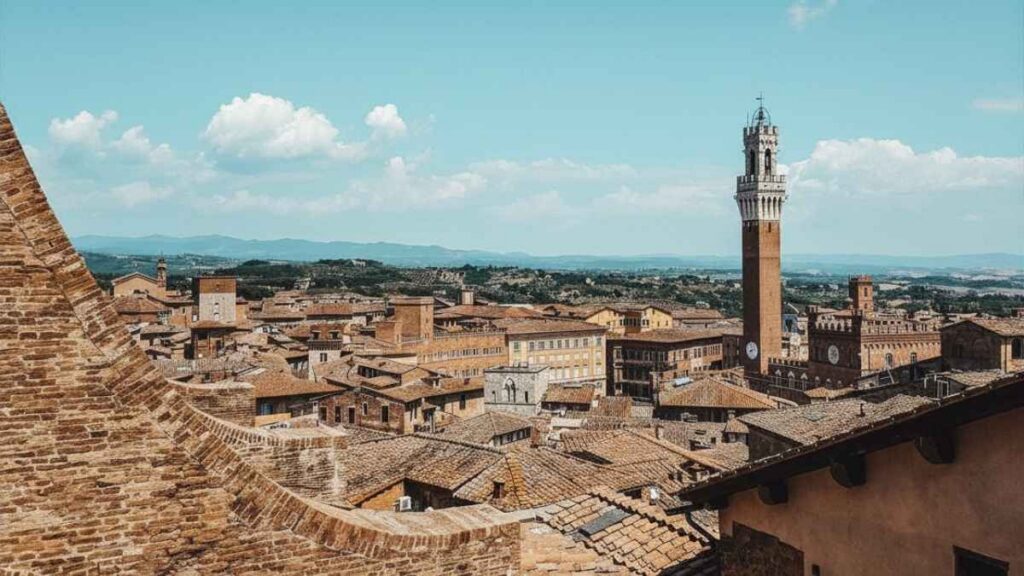
Overlooking the square are the Palazzo Pubblico, the historic seat of civic power, and the Torre del Mangia, which dominates Siena’s skyline with its impressive height. Together, they form the city’s most important monumental complex and are an essential stop for understanding Siena’s history and identity.
Palazzo Pubblico, the Civic Museum and the Allegory of Good and Bad Government
Palazzo Pubblico, overlooking Piazza del Campo, was built as the seat of government of the Republic of Siena and remains one of the city’s foremost civic symbols. Inside is the Civic Museum, whose rooms are decorated with works by some of the most important artists of the Sienese school. Among its most celebrated masterpieces is Ambrogio Lorenzetti’s Allegory of Good and Bad Government. This fresco cycle depicts the effects of just and corrupt government on both the city and the surrounding countryside. Beyond its artistic importance, the work provides an extraordinary insight into medieval political culture and the strong civic spirit that shaped Siena.Siena Cathedral and the Monumental Complex
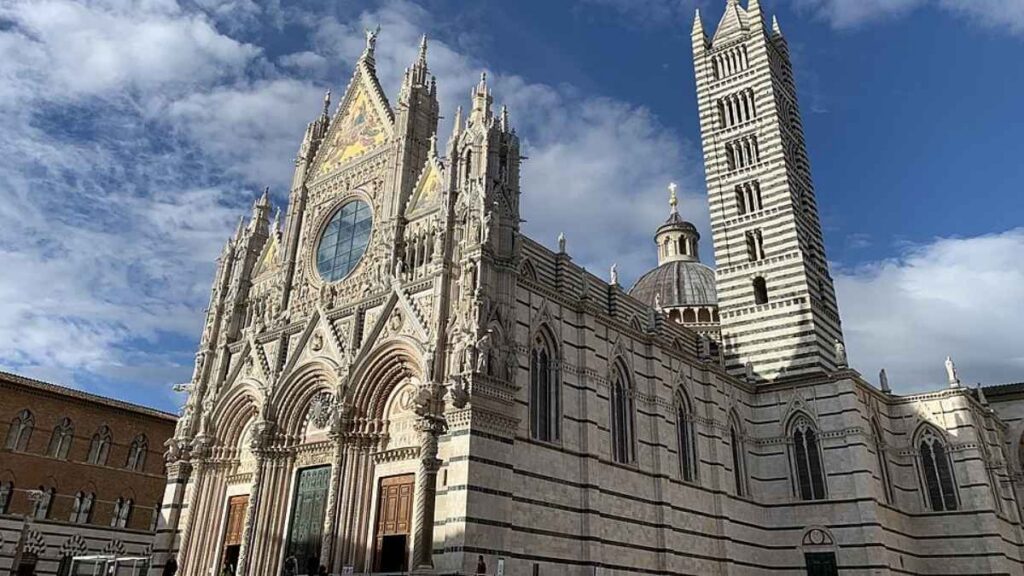
Siena Cathedral is one of the masterpieces of Italian Romanesque-Gothic architecture and one of the city’s most important attractions. Its façade, decorated with polychrome marble, introduces visitors to a monumental complex filled with artworks, elaborate decorations and several distinct visitor routes.
In addition to the Cathedral of Santa Maria Assunta, the complex includes the Piccolomini Library, the Gate of Heaven, the Museo dell’Opera and the Facciatone. Exploring these spaces offers a deeper understanding of Siena’s religious and artistic history, allowing visitors to admire the Cathedral from different perspectives and discover some of its most significant treasures.
The Cathedral and the Piccolomini Library
The Cathedral of Santa Maria Assunta is Siena’s most important religious monument and one of the finest examples of Italian Romanesque-Gothic architecture. The interior is distinguished by its alternating bands of black and white marble, its famous inlaid marble floor and artworks created by some of the leading artists of the Renaissance. One of the most fascinating rooms in the complex is the Piccolomini Library, commissioned by Cardinal Francesco Todeschini Piccolomini. Its walls are decorated with magnificent frescoes by Pinturicchio depicting episodes from the life of Pope Pius II. The richness of the colors and details makes this space one of the most memorable highlights of a visit to the Cathedral.Gate of Heaven, Museo dell’Opera and Facciatone
The Gate of Heaven provides access to the upper sections of the Cathedral, offering a close-up view of its structure, the naves and architectural details that are normally visible only from below. The route also offers panoramic views over Siena’s historic center. Next to the Cathedral, the Museo dell’Opera houses artworks originally created for the monumental complex, including masterpieces of the Sienese school and exhibits connected with the construction of the Cathedral. The visit can conclude at the Facciatone, part of the unfinished project for the New Cathedral, which offers one of the most impressive views over Siena’s rooftops and the surrounding hills.Santa Maria della Scala

Opposite the Cathedral stands Santa Maria della Scala, one of the oldest hospitals in Europe and now one of Siena’s leading museum complexes. Originally founded to provide shelter for pilgrims, the poor and abandoned children, the building still preserves many spaces connected with its original purpose.
Among its most important areas are the Pellegrinaio, decorated with frescoes depicting life within the hospital, the archaeological collections and the underground routes. The visit offers a journey through centuries of history, art and public welfare, providing a different perspective from the city’s most famous religious and civic monuments.
The Basilica of San Domenico and the Sites of Saint Catherine
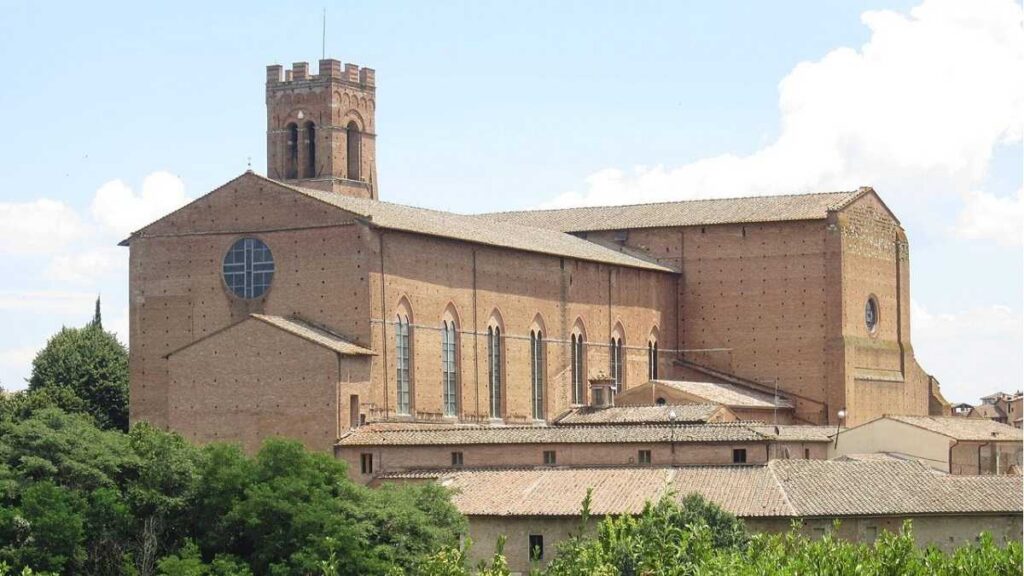
The Basilica of San Domenico is one of Siena’s main religious landmarks and is closely associated with Saint Catherine. Austere and monumental, the building preserves important testimonies to the veneration of the saint, including the Chapel of the Vaults and the Chapel of Saint Catherine, where some of her relics are kept.
Nearby stands the Sanctuary of Saint Catherine, built around the house where she was born. The complex includes several spaces dedicated to her life and spirituality. Visiting these sites offers a deeper understanding of the central role Saint Catherine played in Siena’s religious history and identity.
The National Art Gallery of Siena

The National Art Gallery of Siena houses one of the most important collections devoted to the Sienese school of painting. Its galleries trace the development of local art from the Middle Ages to the Renaissance through works by masters such as Duccio di Buoninsegna, Simone Martini and Ambrogio Lorenzetti.
The museum is particularly recommended for visitors wishing to explore the city’s artistic identity beyond its most famous monuments. Painted panels, altarpieces and gold-ground works reveal the refined, spiritual style that made Sienese painting recognizable throughout Europe.
The Bottini and Fontebranda: Siena’s Waterways
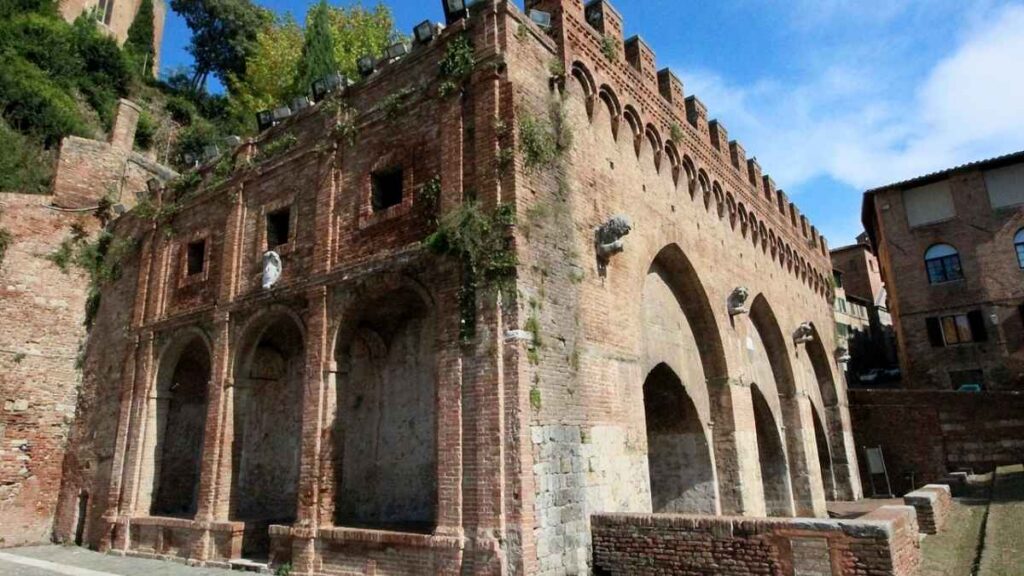
Beneath the streets of Siena lies the Bottini network, a system of underground tunnels built to collect and distribute water in a city with no river. Developed over the centuries, these passageways bear witness to the technical ingenuity and organization of medieval Siena.
Among the fountains supplied by the Bottini, Fontebranda is the most famous. Mentioned by Dante, it still preserves its historic structure and is closely connected with the city’s daily life, craftsmanship and religious traditions. Visiting these sites offers the opportunity to discover a less visible side of Siena and understand the crucial role water played in its urban development.
Strolling Through Siena’s Streets and Squares
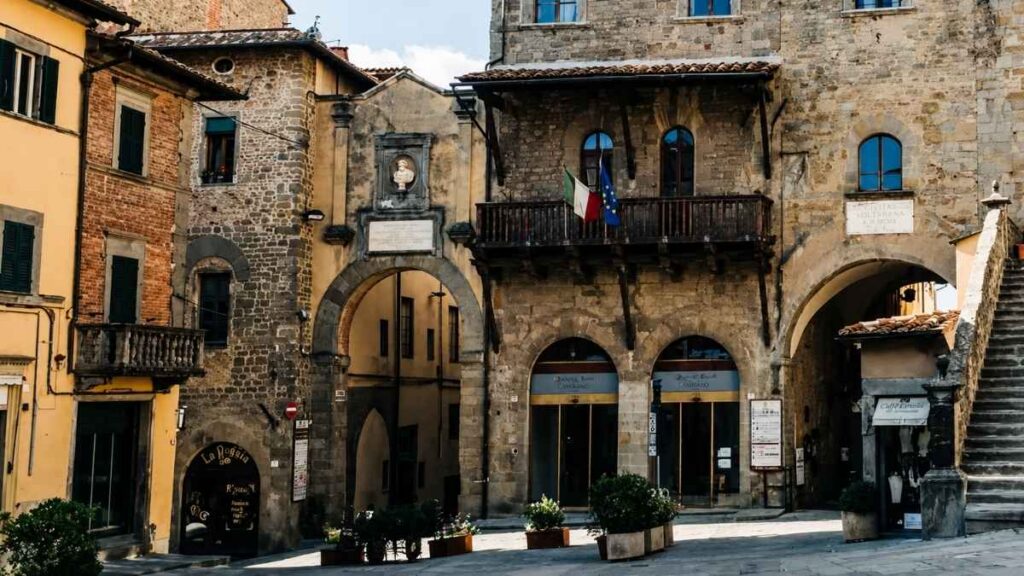
Siena is not discovered only through its most famous monuments. Walking through the historic center allows visitors to observe palaces, workshops, narrow streets and small squares that reflect the city’s everyday life.
Between steep lanes, arches and unexpected views, every route offers a different perspective on Siena’s medieval architecture. Streets such as Banchi di Sopra and Via di Città, together with lesser-known squares and buildings, complete the visit and provide a more authentic experience of the city.
Via di Città, Banchi di Sopra, Piazza Salimbeni and the Logge del Papa
Via di Città and Banchi di Sopra are among the most representative streets in Siena’s historic center. Along the way, visitors will encounter noble palaces, historic businesses, shops and picturesque views connecting some of the city’s main attractions. Piazza Salimbeni offers a more intimate and elegant atmosphere, dominated by historic buildings associated with Siena’s banking tradition. Nearby, the Logge del Papa reflect the city’s Renaissance style through their harmonious and monumental design. Together, these places enrich a visit to the historic center and offer the opportunity to discover Siena beyond its best-known landmarks.The Medici Fortress
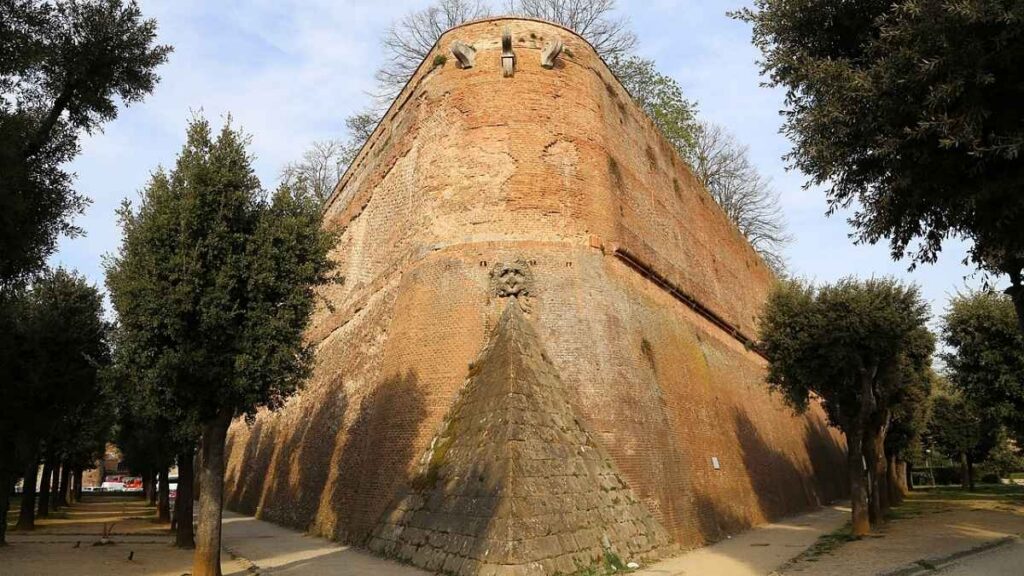
The Medici Fortress was built in the 16th century during Florentine rule and is one of Siena’s most important examples of military architecture. Today, its bastions and surrounding areas are mainly used as green spaces and places for walking.
The route along the walls offers panoramic views of the historic center, the Basilica of San Domenico and the hills surrounding the city. It is a pleasant stop for visitors who wish to alternate sightseeing with a quieter walk away from the busiest streets.
Frequently Asked Questions
Below are some quick answers to the most common questions about planning a visit to Siena and choosing the main attractions to include during your stay at TuscanFlat.